Refinement Challenge Week 5

Standard

Click here to see the post about how it works and the previous weeks aims of inquiry or here for last weeks challenge. This weeks series of questions is aimed at inquiry related to agency:

Agency

  • Talk Time. During the lesson/unit, who is the primary driver of the talk time?
    • Students / Teachers / Both
  • Work Time. During the lesson/unit, who is the primary driver of the work time?
    • Students / Teachers / Both
  • Interest-Based. Is student work reflective of their interests or passions?
    • Yes / No / Somewhat
  • Initiative. Do students have the opportunity to initiate, be entrepreneurial, be self-directed, and/or go beyond given parameters of the learning task or environment?
    • Yes / No / Somewhat
  • Technology Usage. Who is the primary user of the technology?
    • Students / Teachers / Both


Discipline-Specific Inquiry – April

Authenticity/Relevancy- April

Deeper Thinking- April

Personalization-May

Agency-May

Collaboration-May

Assessment-June

Refinement Challenge Week 4

Standard

Click here to see the post about how it works and the previous weeks aims of inquiry or here for last weeks challenge. This weeks series of questions is aimed at inquiry related to personalization:

Personalization

  • Learning Goals. Who selected what is being learned?
    • Students / Teachers / Both
  • Learning Activity. Who selected how it is being learned?
    • Students / Teachers / Both
  • Assessment of Learning. Who selected how students demonstrate their knowledge and skills and how that will be assessed?
    • Students / Teachers / Both
  • Technology Selection. Who selected which technologies are being used?
    • Students / Teachers / Both


Discipline-Specific Inquiry – April

Authenticity/Relevancy- April

Deeper Thinking- April

Personalization-May

Agency-May

Collaboration-May

Assessment-June

Refinement Challenge Week 3

Standard

Click here to see the post about how it works and the previous weeks aims of inquiry or here for last weeks challenge. This weeks series of questions is aimed at inquiry related to deeper thinking:

Deeper Thinking

  • Deeper Thinking. Do learning activities and assessments allow students to engage in critical thinking and complex, messy (not simple) problem solving?
    • Yes / No / Somewhat
  • Creativity. Do students have the opportunity to design, create, make, or otherwise add value that is unique to them?
    • Yes / No / Somewhat
  • Metacognition. Do students have the opportunity to reflect on their planning, thinking, work, and/or progress?
    • Yes / No / Somewhat
    • If yes, can students identify what they’re learning, not just what they’re doing?
      • Yes / No / Somewhat


Discipline-Specific Inquiry – April

Authenticity/Relevancy- April

Deeper Thinking- April

Personalization-May

Agency-May

Collaboration-May

Assessment-June

Refinement Challenge Week 2

Standard

Click here to see the post about how it works and week one aims of inquiry. This weeks series of questions is aimed at inquiry related to authenticity/relevancy:

Authenticity / Relevancy

    • Real or Fake. Is student work authentic and reflective of that done by real people outside of school?
      • Yes / No / Somewhat
    • Contribution. Does student work make a contribution to an audience beyond the classroom walls to the outside world?
      • Yes / No / Somewhat


Discipline-Specific Inquiry – April

Authenticity/Relevancy- April

Deeper Thinking-May

Personalization-May

Agency-May

Collaboration-June

Assessment-June

Take the Refinement Challenge!

Standard

Here is how it works-

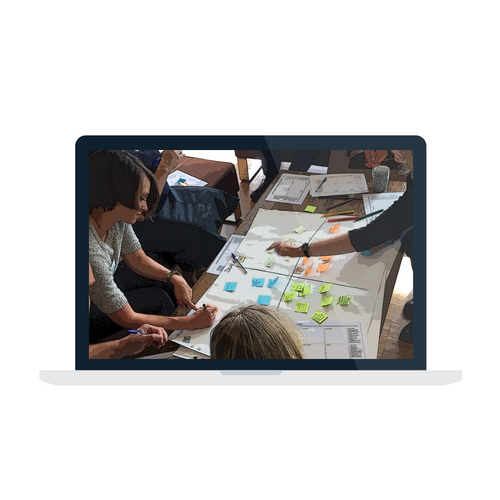
Pick one unit or activity you are willing to refine. Review the  following series of questions (one phase in each TT until June) to help you reflect on your use of technology by finding a colleague and talking through the questions and refining accordingly (*if you need help Liz or Kevin are happy to assist):

Discipline-Specific Inquiry – April

Authenticity/Relevancy- April

Deeper Thinking-May

Personalization-May

Agency-May

Collaboration-June

Assessment-June

This weeks series of questions is aimed at inquiry related to discipline-specific knowledge:

  • Domain Knowledge. Are students learning discipline-specific and -relevant knowledge, skills, and dispositions?
    • Yes / No / Somewhat
    • If yes, is student work focused around big, important themes and concepts that are central to the discipline rather than isolated topics, trivia, or minutiae?
      • Yes / No / Somewhat
    • If yes, are students utilizing discipline-specific and -relevant research, inquiry, and information literacy strategies?
      • Yes / No / Somewhat
  • Domain Practices. Are students utilizing discipline-specific and -relevant practices and processes?
    • Yes / No / Somewhat
  • Domain Technologies. Are students utilizing discipline-specific and -relevant technologies?
    • Yes / No / Somewhat

Leverage Vocab.com

Standard

Esther, Mary Ann and our English colleagues are using Vocab.com with students, and you can too!

To access vocab.com, make sure you are signed in to your school Google account  (Chrome works best) and go to vocab.com in any of the following three ways:

 Through Moodle’s left navigation bar

 Screen Shot 2015-03-17 at 6.01.02 AM

Directly in Google Apps
2015-03-17_0559

 Straight through the url vocab.com

Screen Shot 2015-03-17 at 6.01.29 AM


You can make your own vocabulary lists based on subject specific vocabulary and share them with your students. Talk to Esther, Liz or Ian if you want a brief tutorial, or read the instructions on the website itself.

Digitally Efficient Ways to Check for Understanding

Standard

Interactive writing is one of the elements listed on Wes Fryer’s digital media creation grid I shared last week.  At ZIS Upper School some of our most efficient digital tools for interactive writing are:

  • Student digital portfolios
  • Google apps (docs, spreadsheets, presentations, etc) shared as anyone with the link can edit
  • Moodle discussion forums
  • Padlet walls

Screen Shot 2014-11-11 at 9.57.31 AM

These are all great digital tools, but in an of themselves they do not get at what’s needed most, quick, appropriate, timely feedback!  However, pair one of these digital tools with the right method for checking for understanding, and you and your students are on the road to formative assessment bliss.  I use the word bliss purposefully, because what most teachers and students want to avoid at all costs is the opposite:)

If you need some ideas check out this comprehensive list of 53 ways to check for understanding from Edutopia.

Geoguessr

Standard

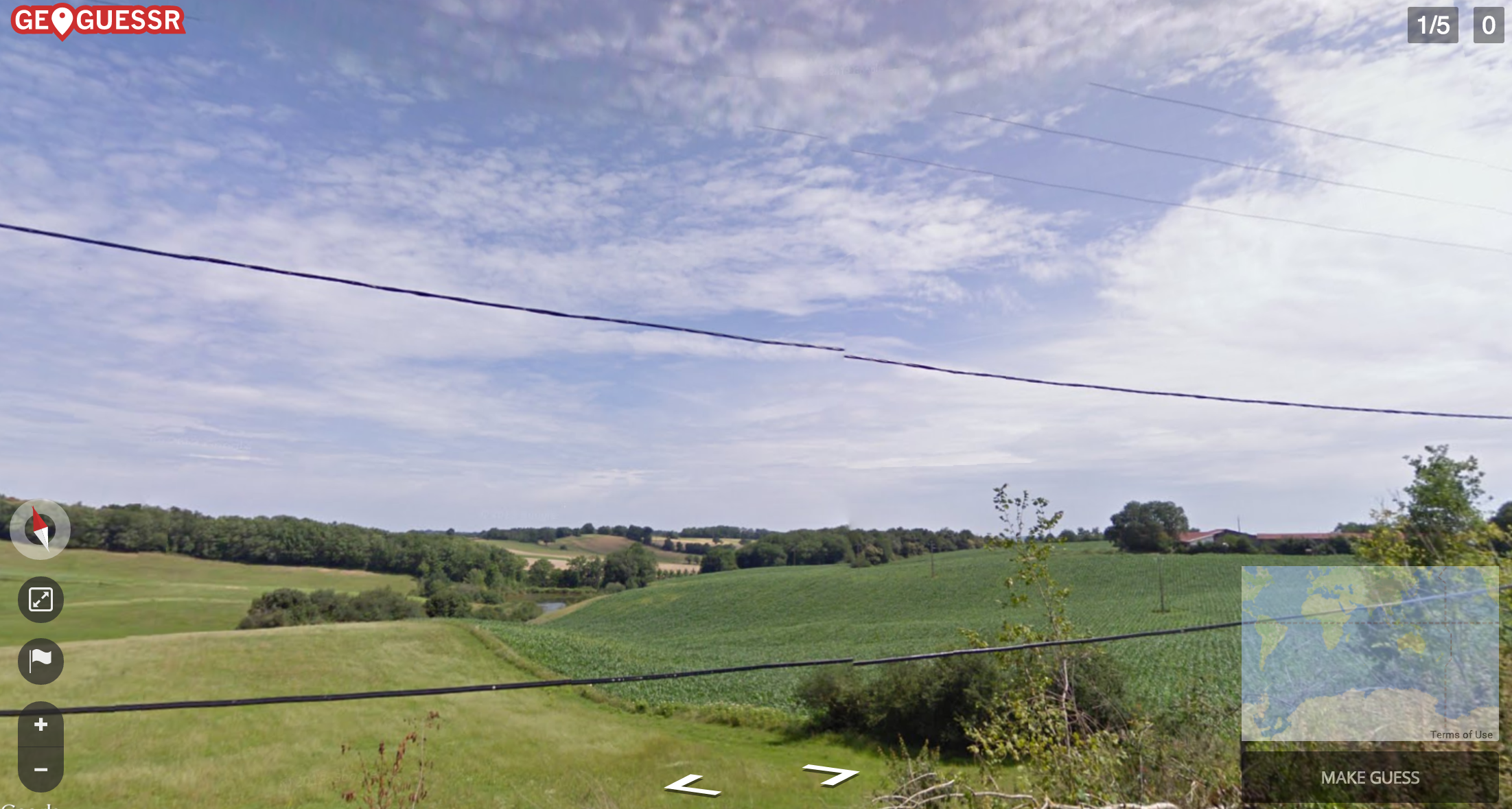
Geoguessr is a simple game that drops students into Google Earth street view and then asks, where are you? So much of what we need students to be able to do today is to stop and make careful observations about their own and others learning.  This game is a quick and engaging way to start the conversion about making observations.

According to Higgins (2014), “The experience of playing Geoguessr is like survivalist education mixed with a bit of Sherlock Holmes. Students are thrown into a situation — in this case a place — and must think their way through it. They need to unpack the mystery of the Street View image, identifying, classifying, and evaluating its clues, and making deductions from them.” Check out more about Geoguessr in his article titled A Deceptively Simple Game That Teachers Students to Ask the Right Questions. 

Screen Shot 2014-10-27 at 3.18.27 PM

A Whole World at Your Fingertips to Provide Context for Learning

Standard

How do you digitally enhance content with thick and rich context for students?  Below are three examples that simple and immersive ways to give context to new or difficult concepts:


INTRODUCE A NEW TOPIC/CONCEPT: Google Cultural Institute New Voices in Contemporary British Music as full immersion using a variety of multimedia

https://embed.culturalspot.org/embed/exhibit/new-voices-in-contemporary-british-music/QRFBBGkM?position=0%2C-1&hl=en


In Search of Beowolf Google Lit Trip including audio and video

Screen Shot 2014-09-23 at 10.44.31 AM


IB ASSESSMENT using Google Maps:

Group IV Project – To what extent does a human construct have an affect on the diversity… (consolidated data) project at the International School of Prague

Screen Shot 2014-09-23 at 10.49.48 AM