Tips for Using Classroom From Students

Standard

It you have not done so already (in last weeks TT) please fill out this form. Below are some likes and dislikes as well as tips based on the results collected last week from students and teachers:

What students like and do not like about how teachers are using classroom part 1 (more to come including face to face forums w/ students):

  • Students LIKE:
    • When teachers ask them for input in how the space is being used
    • When teachers understand the implications of their choices (e.g. choosing to present information that is many many clicks away)
    • Being able to access assignments within two clicks or less
    • Having items that will be held to the Late Work Policy to be assigned within the stream with corresponding due dates down to the exact time (not just date)
    • When teachers present organized information consistently. They like getting used to being able to find their way around
  • Students DO NOT LIKE:
    • Having to click through multiple layers to find what is due when. They really really dislike when the only place they can find homework is within a SMART Notebook file that needs to be downloaded, opened and sifted through
    • When items are assigned to them after the class period has ended, but are due before the next class period
    • When items that are assigned are deleted even after they are due.
    • When items do not have a clear due date and time, or when this information is changed multiple times
    • Being assigned items in the stream that are reoccurring class routines (e.g. bring your tablet to class, bring your book etc.).  If you need to communicate this information outside of class, they would like it to be in the announcements. This information could also be created as long events in the class calendar directly within Google calendar: warning events created directly in Google calendar do not appear in Classroom

Tip: turn off email notifications

By default, you receive an email notification when either event occurs:

  • Someone adds a comment to your post
  • A private comment is posted on a student’s assignment or question submission

You can change whether you receive email notifications.

Scroll down and click Settings.

Click Settings

Tip: Understand the assignment workflow 

Classroom weaves together Google Docs, Drive, and Gmail so teachers can create and collect assignments paperlessly. Within Classroom, teachers can create an assignment, use it in multiple classes, and choose how students complete the assignment (for example, whether each student receives an individual copy or all students work in the same copy of the assignment). The teacher can track who has completed the assignment and who hasn’t, and provide feedback to individual students.

Here’s an example of the assignment flow between a teacher and a student:

Teacher

Student

Teacher creates an assignment with an attached Google Doc.

Student edits the copy of the homework and turns it in.

Teacher grades the assignment.

Student reviews and edits the copy of the homework.
  1. Teacher selects the option to create a copy of the Google Doc for each student and sends the assignment to the class.
  2. After turning in an assignment, the student loses edit access to the Doc but remains a viewer.
  3. The teacher edits the Doc to grade the assignment, returns it to the student, and editing access is again transferred to the student.

Both the teacher and students can see a list of pending and completed class assignments. The teacher can see all of the grades for an assignment, and students can see their own grades for completed assignments.

Phone Tower- Classroom Norm

Standard

cell phones stacked

It’s unanimous! Our favorite means to navigate phone usage with groups of students (& adults) is to have all individuals stack their phone in a designated corner (or box, or basket etc.) when they enter the learning space. It sends a signal that our time together is valuable enough that we need to be distraction free. Phones are fantastic tools that can really extend and transform teaching and learning, but we cannot escape that they are VERY GOOD AT DISTRACTING US.

Having your group stick to the norm of stacking their phones in a tower creates the context to have a bunch of teachable moments. For example:

  • phone dings= teachable moment about how audible alerts divert our attention (*see Foroughi, Werner, Hatcher, Lopez, Zafar & Boehm-Davis, 2014 for more)
  • phone vibrates= teachable moment about how even a phone on silent can be distracting (*see Turkle’s 2015 piece in the NYTimes for more)
  • students need to capture their learning= teachable moment about when and why phones should be used in class


Refinement Challenge Week 6

Standard

Click here to see the post about how it works and the previous weeks aims of inquiry or here for last weeks challenge. This weeks series of questions is aimed at inquiry related to communication:

Communication

  • Audience. How are students communicating?
    • Alone / In pairs / In triads / In groups larger than 3
    • If with others, with whom? (circle all that apply)
      • Students in this school / Students in another school / Adults in this school / Adults outside of this school
  • Communication Technologies. Are digital technologies being used to facilitate the communication processes?
    • Yes / no
    • If yes, in which ways? (circle all that apply)
      • Writing / photos and images / charts and graphs / infographics /
        audio / video / multimedia / transmedia


Discipline-Specific Inquiry – April

Authenticity/Relevancy- April

Deeper Thinking- April

Personalization-May

Agency-May  

Communication-May

Collaboration-May

Assessment-June

Digitally Efficient Ways to Check for Understanding

Standard

Interactive writing is one of the elements listed on Wes Fryer’s digital media creation grid I shared last week.  At ZIS Upper School some of our most efficient digital tools for interactive writing are:

  • Student digital portfolios
  • Google apps (docs, spreadsheets, presentations, etc) shared as anyone with the link can edit
  • Moodle discussion forums
  • Padlet walls

Screen Shot 2014-11-11 at 9.57.31 AM

These are all great digital tools, but in an of themselves they do not get at what’s needed most, quick, appropriate, timely feedback!  However, pair one of these digital tools with the right method for checking for understanding, and you and your students are on the road to formative assessment bliss.  I use the word bliss purposefully, because what most teachers and students want to avoid at all costs is the opposite:)

If you need some ideas check out this comprehensive list of 53 ways to check for understanding from Edutopia.

A Whole World at Your Fingertips to Provide Context for Learning

Standard

How do you digitally enhance content with thick and rich context for students?  Below are three examples that simple and immersive ways to give context to new or difficult concepts:


INTRODUCE A NEW TOPIC/CONCEPT: Google Cultural Institute New Voices in Contemporary British Music as full immersion using a variety of multimedia

https://embed.culturalspot.org/embed/exhibit/new-voices-in-contemporary-british-music/QRFBBGkM?position=0%2C-1&hl=en


In Search of Beowolf Google Lit Trip including audio and video

Screen Shot 2014-09-23 at 10.44.31 AM


IB ASSESSMENT using Google Maps:

Group IV Project – To what extent does a human construct have an affect on the diversity… (consolidated data) project at the International School of Prague

Screen Shot 2014-09-23 at 10.49.48 AM


Research on Note Taking

Standard

Research on note taking is closely aligned with summarizing.  According to a recent article by Joseph Stromberg (2014), Why you should take notes by hand — not on a laptop, “taking notes by hand forces you to actively listen and decide what’s important” (p.1).  The article then goes on to articulate findings from the latest research from psychologists Mueller and Oppenheimer that found students who type notes are not actively listening and deciding what’s important…..summarizing:)  Read their full study here (yes I’m acting like Aaron Swartz, but I’m saving you the trouble of logging into the library’s database:)).

What this article and related research highlights is that doing old things in “new” ways is not always better.  Marzano and his crew’s summary of student note taking research highlights the following tips:

  1. Verbatim note taking is, perhaps the least effective way to take notes.
  2. Notes should be considered a work in progress.
  3. Notes should be used as study guides for tests.
  4. The mores notes that are taken, the better (Marzano, Pickering & Pollock, 2001).

How many of you give time for students to refine and summarize their notes?  Are there any specific tips and tricks you have learned you can share with your colleagues about this topic? …if so comment below:)

Stay tuned for next weeks look at teacher provided notes.
Blended Learning, Yet Another Look

Standard

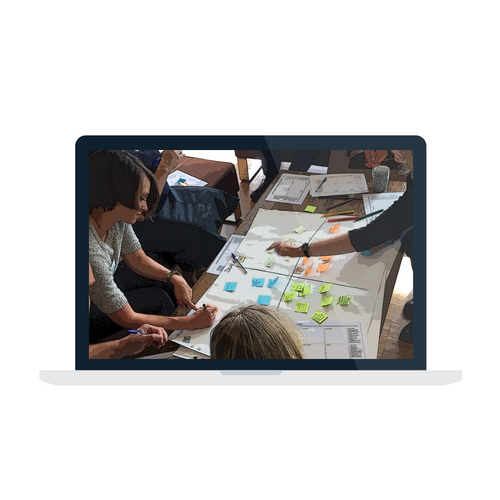
Last night your Social Studies colleagues took time to deconstruct the communication side of blended learning.


If you have time stop by the PBLR and take a look at their design thinking approach to the question, why does communication with students fail?

why comm fails