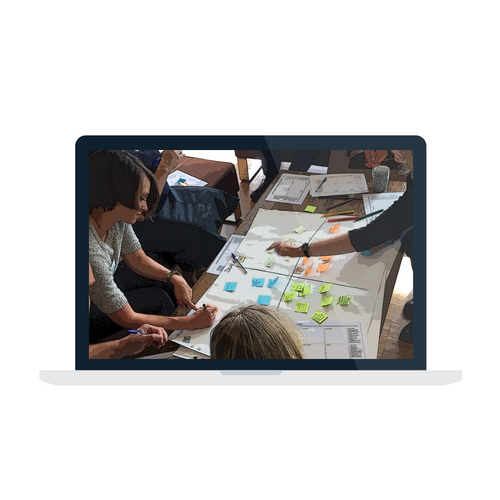


Students are already publishing content online. ZIS encourages students to appropriately shape their online digital footprint by actively publishing online. According to the Pew Reacher Center’s Internet and American Life Project study, 75% of teens regularly use social-networking sites to publish updates, photos, videos and more (Lenhart as cited in Richardson, 2011). The new Definition of 21st Century Literacies by the National Council of Teachers of English (2008) has been revamped to include that students need to be able to “design and share information for global communities to meet a variety of purposes” (Richardson, 2010).
Our students need to have opportunities to publish content online. These opportunities provide context of “teachable moments” regarding digital citizenship and contemporary literacy skills. There are two approaches to digital publishing within the curriculum: documentation of learning or documentation of achievement (Barrett, 2011).

How is it happening at the ZIS Upper School:
- In English in particular, students in grade 10 during the 2011-2012 school year published many of their assignments on digital portfolios in the form of blogs. During this school year students in grade 9 , 10 & 11 are curating some digital works in the form of a digital portfolio in other classes besides English.
- Students and teachers are actively encouraged to publish their work on the ZIS Upper School YouTube channel and the ZIS Upper School Flickr photo stream.
http://www.flickr.com/apps/slideshow/show.swf?v=109615
- Students and teachers post daily announcements on the ZIS Upper School Announcements blog.
- Students in Digital Journalism and the student news paper, The Lion’s Journal, actively publish contents online for and about school related topics. This publication is entirely student run and the contents that is posted is decided by the students.
- In all instances of digital publishing students and teachers are asked to follow the Responsible Use Policy outlined in the school handbook. A few key points are:
- First names only unless given permission to post the full name
- Copyright is followed and creative commons is used
The ZIS Upper School throughout the year in advisory and within classes follows the steps outlined by Richardson:
- Become “Googleable” yourself. To fully understand the implications for students, teachers need to have some personal context for sharing and interacting online. As a first step, start a Twitter account or a blog and begin exploring your own interests with others with whom you can learn and collaborate.
- Model connections. Share your own online interactions with students. When relevant and appropriate, talk about how you’re learning from others and how and why you choose to participate online. Use Skype or shared blog spaces to introduce students to learners who are passionate about the subjects they’re studying. Use the learning connections you’ve established in Step 1 to begin to share your work with the world.
- Share student work. Create a classroom portal online where you can regularly share student work. As much as possible, make sharing a natural part of the learning process, publishing interesting student blog posts, videos, or other quality artifacts that students create. Find ways to encourage discussion and interactions from readers online. See, for instance, how to use the hash tag #comments4kids (http://comments4kids.blogspot.com) on Twitter to find blogs to comment on and to get student posts commented on.
With younger students, moderate those interactions. With older students, share strategies for moderating and vetting to help them become responsible for monitoring and responding to comments on their own. Have discussions on what appropriate interactions look like, how to make sure commenters are who they say they are, and how to respond to a comment appropriately. - Practice and teach “reputation management.” Help students hone strategies for the continual monitoring of their lives online—not just in what they produce but in what others publish and share about them. This might include setting up e-mail alerts or RSS feeds that deliver links when they are mentioned online or tagged in photos or learning simple strategies for searching for themselves online.
Additional information:
- Electronicportfolios.org by Dr. Helen Barrett
- Balancing the Two Faces of E-Portfolios Barrett, H. (2011) Balancing the Two Faces of E-Portfolios. British Columbia Ministry of Education, Innovations in Education, 2nd Edition. http://electronicportfolios.org/balance/balancingarticle2.pdf (2 MB)
- Lehmann, C. (2008, February 1). When to publish [blog post]. Retrieved from Practical Theory athttp://practicaltheory.org/serendipity/index.php?/archives/932-When-to-Publish.html
- National Council of Teachers of English. (2008, February 15). The definition of 21st century literacies. Retrieved from www.ncte.org/governance/literacies
 Tech Tuesday