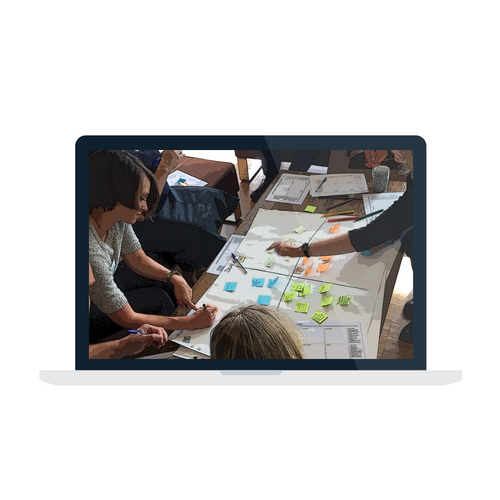
Research on note taking is closely aligned with summarizing. According to a recent article by Joseph Stromberg (2014), Why you should take notes by hand — not on a laptop, “taking notes by hand forces you to actively listen and decide what’s important” (p.1). The article then goes on to articulate findings from the latest research from psychologists Mueller and Oppenheimer that found students who type notes are not actively listening and deciding what’s important…..summarizing:) Read their full study here (yes I’m acting like Aaron Swartz, but I’m saving you the trouble of logging into the library’s database:)).
What this article and related research highlights is that doing old things in “new” ways is not always better. Marzano and his crew’s summary of student note taking research highlights the following tips:
- Verbatim note taking is, perhaps the least effective way to take notes.
- Notes should be considered a work in progress.
- Notes should be used as study guides for tests.
- The mores notes that are taken, the better (Marzano, Pickering & Pollock, 2001).
How many of you give time for students to refine and summarize their notes? Are there any specific tips and tricks you have learned you can share with your colleagues about this topic? …if so comment below:)
Stay tuned for next weeks look at teacher provided notes.
 Tech Tuesday
I’m a big fan of Cornell Notes. I’ve got students now in grad school who still tag me on pics of their Cornell-noting–the notes they love to hate because they work even though they can be a pain to build into a habit.
I also encourage use of symbols (fave being the geometry dot triangle so I never have to write “therefore” again (in notes)), abbreviations, contractions, and other note-taking shorty shortcuts.
And I’m also a big believer in handwritten notes and in posting notes about notes. Which is why I posted your blog link on my Zoodle pages and FB class pages. I’ve seen more students convert to good note habits when they see and trust the research.
Also, the bit about notes being a work in progress is a good point you made. When students peer-learn and discuss, I require them to augment their notes in a different color so they can see for themselves if their note-taking is strong or weak (e.g., a pattern of days ended with more augmented color than original color probably indicates notes are too vague; a pattern of days with a lot crossed out might indicate notes are too nitpicky) and so they can see for themselves how well peer-learning can help to flesh out full understanding of ideas and concepts.
LikeLike